If you’re starving by 10 a.m., your breakfast may be missing protein. Many popular breakfast foods, like cereal, toast, bagels, muffins and pastries, are mostly carbohydrates. They’re quick to digest, which can leave you hungry again soon after eating.
Adding protein to your morning meal can help you feel fuller for longer, which may make it easier to manage your appetite and your weight throughout the day.
Why protein helps you stay full
Protein takes longer to digest than refined carbohydrates, and it affects hormones involved in hunger and fullness. Meals that combine protein with fiber, from whole grains, fruits, vegetables, nuts or seeds, tend to be the most satisfying. This combination also helps prevent the quick rise and fall in blood sugar that can trigger mid-morning cravings.
Protein is also important for maintaining muscle, especially as we age. Spreading protein across your meals, instead of eating most of it at dinner, is a helpful habit.
How much protein at breakfast?
Many nutrition experts suggest aiming for about 20 to 30 grams of protein at breakfast, though needs vary by body size, age and activity level. For reference:
- 1 large egg: about 6 grams
- 3 egg whites: about 11 grams
- 1 cup plain Greek yogurt: about 20 grams
- 1/2 cup cottage cheese: about 12 grams
- 2 tablespoons peanut butter: about 7 grams
- 1 cup cow’s milk or soy milk: about 7 to 8 grams
High-protein breakfast ideas
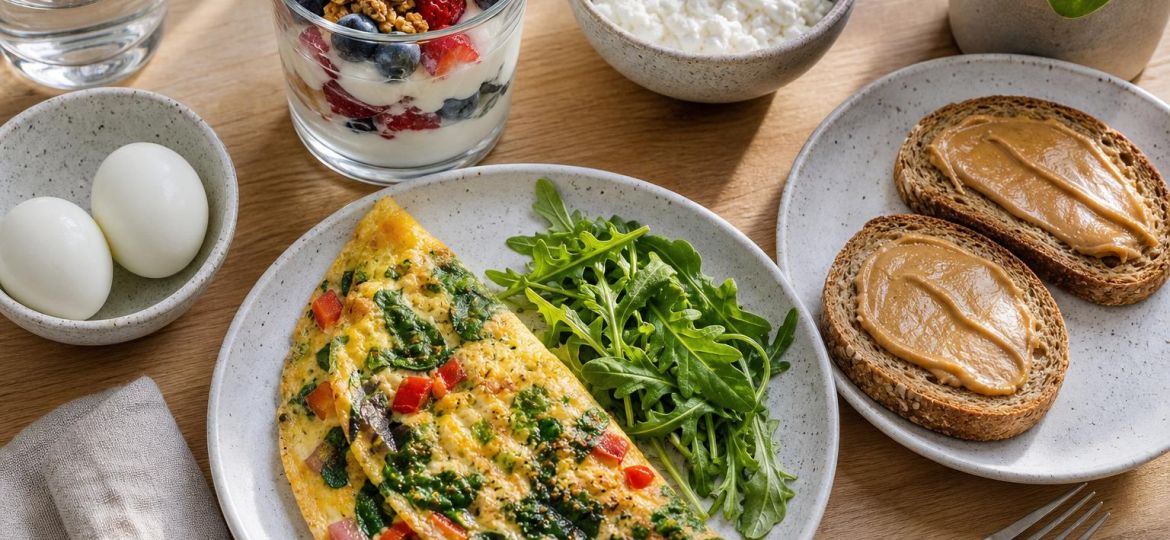
- Egg or egg-white omelet filled with vegetables, with a slice of whole-grain toast.
- Greek yogurt parfait with berries, nuts and a sprinkle of chia seeds.
- Overnight oats made with milk and Greek yogurt.
- Cottage cheese with fruit or sliced tomatoes and black pepper.
- Whole-grain toast with peanut or almond butter and banana slices.
- Breakfast burrito with scrambled eggs, black beans and salsa in a whole-wheat tortilla.
- Tofu scramble with spinach and peppers for a plant-based option.
- Smoothie blended with Greek yogurt or milk, fruit and a spoonful of nut butter.
Recipes to try
- Spinach and Mushroom Egg-White Omelet (DASH-Style): ready in 20 minutes and packed with protein.
- Overnight Oats with Berries and Chia: Greek yogurt and milk boost the protein in this make-ahead breakfast.
Tips for busy mornings
- Hard-boil a batch of eggs on the weekend.
- Prepare overnight oats or yogurt parfaits in jars for the week.
- Keep single-serve Greek yogurt and nut butter packs on hand.
- Pair protein with fruit or whole grains so breakfast is balanced, not just protein.
What this means for you
A protein-rich breakfast can help you feel satisfied, avoid mid-morning snacking and support steady energy. It’s one helpful piece of weight management, along with balanced meals, regular activity and good sleep.
If you have kidney disease, your protein needs may be different, so check with your doctor or dietitian before increasing protein.
The bottom line
Adding protein to breakfast, ideally with fiber-rich foods, can help keep you full until lunch. Eggs, Greek yogurt, cottage cheese, nut butters and tofu are easy ways to start your day strong.
Common questions
Is it okay to skip breakfast?
Some people feel fine skipping breakfast, while others get too hungry later and overeat. What matters most is the overall quality of your diet. If you do eat breakfast, including protein helps keep you satisfied.
Are protein bars a good breakfast?
Some are fine in a pinch, but many are high in added sugar. Check the label, and choose whole foods most of the time.
What’s a good plant-based option?
Try a tofu scramble, soy milk smoothie, oatmeal topped with nut butter and hemp seeds, or a whole-grain wrap with black beans and vegetables.
This article is for general information and isn’t medical advice. Talk with your healthcare provider or a registered dietitian about your individual needs, especially if you have a health condition or food allergies.