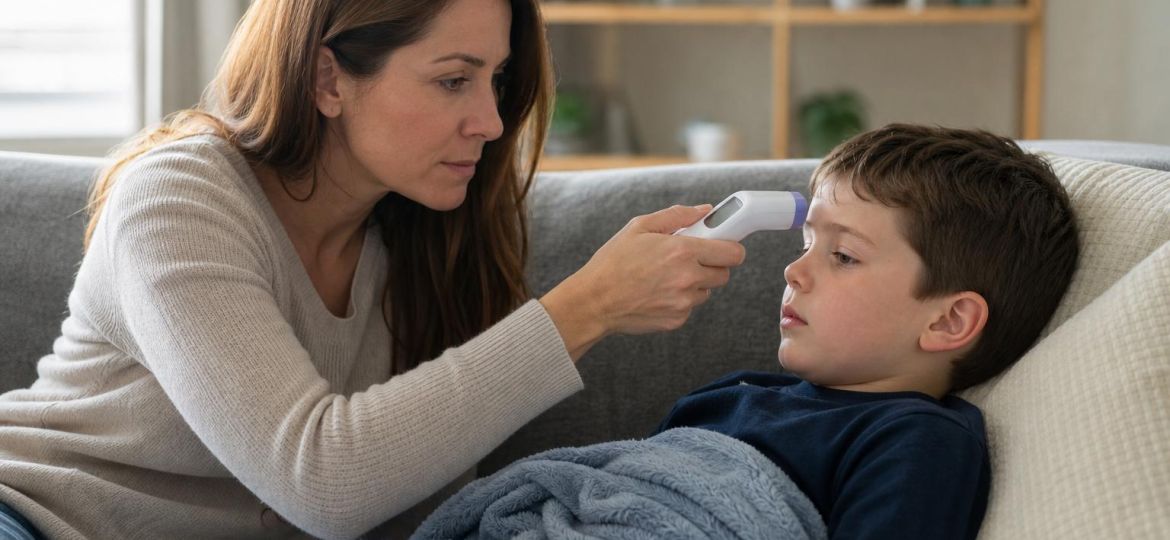
The flu can be hard on kids. Children, especially those under 5 and those with chronic conditions like asthma, are more likely than healthy adults to develop serious complications such as pneumonia, dehydration and, rarely, inflammation of the brain or heart. Most children recover at home, but parents should know the signs that mean a child needs medical care right away.
Common flu symptoms in children
- Sudden fever, often high
- Chills and body aches
- Cough and sore throat
- Runny or stuffy nose
- Headache and tiredness
- Vomiting and diarrhea, which are more common in children than adults
Babies and toddlers may not be able to tell you how they feel. Watch for fussiness, poor feeding and unusual sleepiness.
Emergency warning signs: seek care right away
- Fast breathing or trouble breathing
- Bluish lips or face
- Ribs pulling in with each breath
- Chest pain
- Severe muscle pain, such as refusing to walk
- Signs of dehydration: no urine for 8 hours, dry mouth, no tears when crying
- Not alert or interacting when awake, or very hard to wake up
- Seizures
- Fever above 104°F (40°C), or any fever in a baby younger than 12 weeks
- Fever or cough that improves but then returns or gets worse
- Worsening of a chronic condition, such as asthma
When to call the doctor
Call your child’s doctor promptly if your child has flu symptoms and is under 5, has a chronic condition such as asthma, diabetes or heart disease, or isn’t getting better after a few days. Antiviral medicine is recommended for children at higher risk and works best when started within 48 hours.
Caring for a child with flu at home
- Rest and plenty of fluids, such as water, oral rehydration solutions, popsicles and soup.
- Fever relief: acetaminophen or ibuprofen (for children over 6 months) can help with comfort. Follow dosing instructions for your child’s weight and age.
- Never give aspirin to children or teens with flu, because it can cause a rare but serious condition called Reye’s syndrome.
- Keep your child home until they’ve been fever-free for at least 24 hours without fever-reducing medicine and are feeling better.
See more tips for caring for flu at home.
Prevention
An annual flu vaccine is the best way to protect children 6 months and older. Children ages 6 months through 8 years getting vaccinated for the first time may need two doses, given at least 4 weeks apart. Babies under 6 months are too young to be vaccinated, so vaccinating parents, siblings and caregivers, and vaccination during pregnancy, helps protect them.
A note on changing guidance: U.S. federal vaccine recommendations have changed several times since 2025, and some changes have been challenged in court. In 2026, a federal court order kept earlier recommendations in place while the case continues. Medical groups such as the American Academy of Pediatrics (AAP), the American College of Obstetricians and Gynecologists (ACOG) and the American Academy of Family Physicians (AAFP) also publish their own recommendations. Because guidance may change, check with your doctor or pharmacist about what’s recommended for you.
Teach kids to wash their hands often and cover coughs and sneezes.
What this means for you
Trust your instincts. If your child seems very sick or something doesn’t feel right, call your doctor or seek care, even if your child doesn’t have every warning sign.
The bottom line
Most children with the flu recover at home with rest and fluids, but young children and those with chronic conditions face higher risks. Know the emergency warning signs, call your doctor early and keep up with annual flu vaccination.
Common questions
Can my child go to school with the flu?
Keep your child home until they’ve been fever-free for at least 24 hours without fever-reducing medicine and their symptoms are improving.
This article is for general information and isn’t medical advice. Talk with your healthcare provider about your individual needs.