Limited mobility doesn’t have to mean no exercise. Whether you’re recovering from an injury, managing arthritis, using a wheelchair or simply find standing workouts difficult, a chair can become your gym.
This seated routine includes gentle cardio, strength moves for the arms, legs and core, and stretches, all done sitting down. Every bit of movement counts. The CDC notes that some physical activity is better than none, and adults who sit less and move more gain health benefits.
Seated Chair Workout for Limited Mobility: At a Glance
Before You Start
- Use a stable chair without wheels, placed on a flat, non-slip surface.
- Sit toward the front of the seat with your feet flat on the floor and your back tall.
- Move within a pain-free range. Mild effort is fine, but sharp pain is a signal to stop.
- Ask your doctor or physical therapist if you have recent surgery, joint replacements or balance problems.
Warm-Up (3 to 5 minutes)
- Seated march: lift your knees one at a time for 1 minute.
- 10 shoulder rolls backward and forward.
- 10 gentle neck turns, looking left and right.
- 10 ankle pumps, pointing and flexing your feet.
The Workout
Do each move for the reps listed. Rest 30 seconds between exercises. Complete 1 round to start, and build up to 2 or 3 rounds as you get stronger.
- Seated march with arm pumps (60 seconds)
March your feet quickly while pumping your arms as if walking briskly. Form tip: Sit tall and keep your core lightly engaged. - Seated leg extension (10 reps per leg)
Straighten one knee until your leg is parallel to the floor, hold for 2 seconds, then lower slowly. Form tip: Squeeze the front of your thigh at the top. - Overhead press (10 to 12 reps)
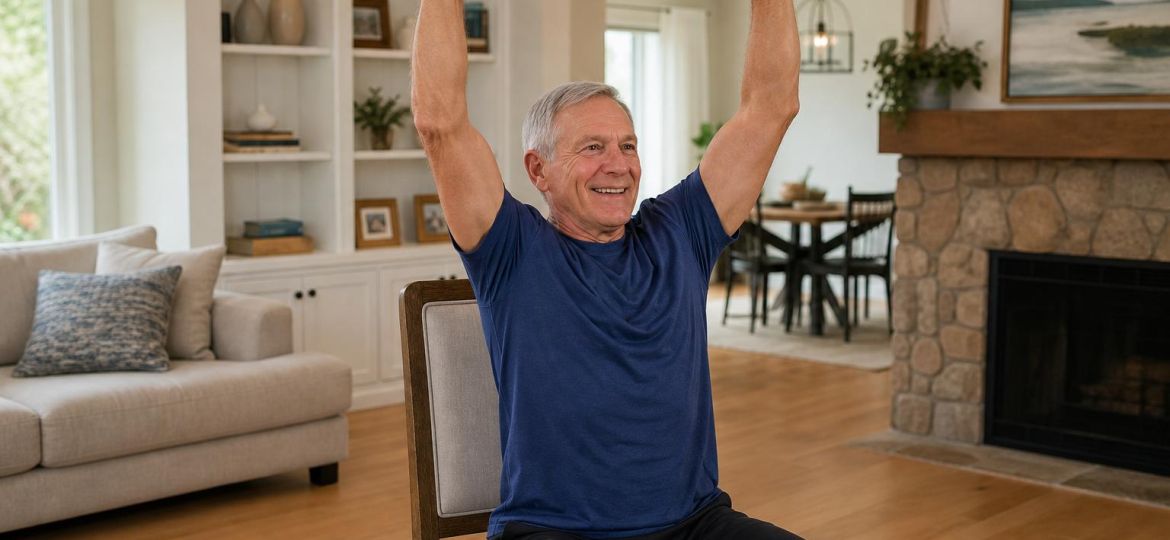
Hold light weights or water bottles at shoulder height and press them overhead, then lower slowly. Form tip: Keep your back against the chair if you need extra support. - Seated torso twist (10 reps per side)
Cross your arms over your chest and slowly rotate your upper body to one side, then the other. Form tip: Turn from your waist and keep your hips facing forward. - Bicep curl (10 to 12 reps)
With arms at your sides and palms facing forward, bend your elbows to bring the weights toward your shoulders, then lower. Form tip: Keep your elbows close to your body. - Seated knee lift (core) (8 to 10 reps per leg)
Holding the sides of the chair, lift one knee toward your chest, then lower with control. Form tip: Lean back slightly and tighten your stomach muscles. - Sit-to-stand (if able) (5 to 8 reps)
Scoot forward, lean slightly and stand up, using your hands on the chair if needed. Sit down slowly. Form tip: Skip this move if standing isn’t safe for you.
Cool-Down (3 to 5 minutes)
- Seated hamstring stretch: extend one leg and gently lean forward, 20 to 30 seconds per leg.
- Overhead reach: stretch your arms up and lean gently side to side.
- Chest opener: clasp your hands behind your back or the chair and lift your chest.
- 5 slow, deep breaths.
Make It Easier or Harder
- Easier: Skip the weights, do fewer reps and rest longer.
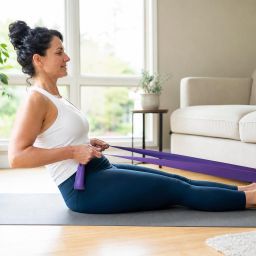
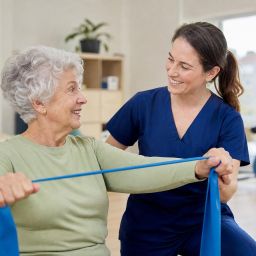
- Harder: Add rounds, use heavier weights or add a resistance band for presses and rows.
- Upper body only? Focus on presses, curls, twists and arm pumps if leg movement is limited.
- Break it up: Doing 5 to 10 minutes a few times a day works too.
Why This Workout Helps
Seated exercise keeps muscles working, supports circulation, helps maintain range of motion and can boost energy and mood. Staying strong also makes everyday tasks like getting out of a chair, dressing and carrying things easier, which helps protect independence.
Long periods of sitting are linked to health problems, so breaking up sitting time with movement is valuable even when standing exercise isn’t possible.
This article is for general information and isn’t medical advice. Check with your doctor before starting a new exercise program, especially if you have heart disease, diabetes, high blood pressure, joint problems, a lung condition or another health concern. Stop and seek medical help if you feel chest pain, dizziness, faintness or severe shortness of breath.