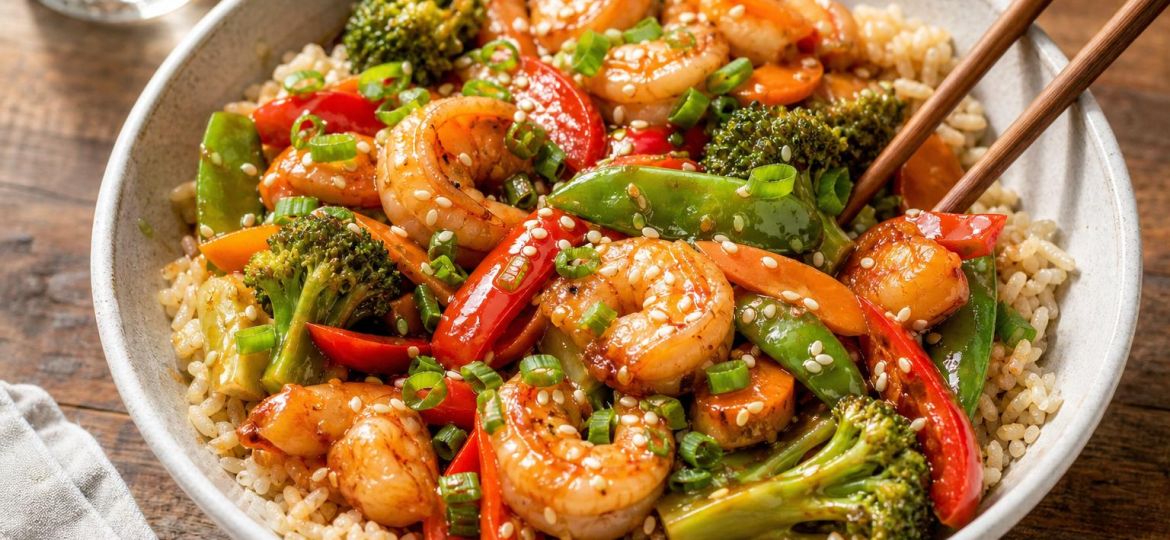
Takeout stir-fries often come swimming in sugary, salty sauces. This homemade version takes about 30 minutes and uses a simple ginger-garlic sauce with reduced-sodium soy sauce and no added sugar. Lots of crisp vegetables and tender shrimp make it filling, and brown rice adds whole-grain fiber.
It’s also a good example of the kind of meal often recommended for people with fatty liver disease (now often called MASLD). The National Institute of Diabetes and Digestive and Kidney Diseases (NIDDK) advises a healthy eating plan that limits added sugars, refined carbohydrates and saturated fat, and favors vegetables, whole grains and lean proteins.
Shrimp and Vegetable Stir-Fry with Brown Rice: Recipe at a Glance
Ingredients
- 1 pound large shrimp, peeled and deveined
- 1 tablespoon avocado or canola oil, divided
- 2 cups broccoli florets
- 1 red bell pepper, sliced
- 1 cup snap peas or snow peas
- 1 medium carrot, thinly sliced
- 4 green onions, sliced, white and green parts separated
- 2 cups cooked brown rice, warm
- Sauce: 2 tablespoons reduced-sodium soy sauce
- 1 tablespoon rice vinegar
- 1 tablespoon fresh grated ginger
- 3 garlic cloves, minced
- 1 teaspoon toasted sesame oil
- 1 teaspoon cornstarch mixed with 3 tablespoons water
- 1/4 teaspoon red pepper flakes (optional)
- 1 teaspoon sesame seeds for garnish
Instructions
- Cook the brown rice according to the package directions, or use leftover or frozen cooked brown rice.
- In a small bowl, whisk together the soy sauce, rice vinegar, ginger, garlic, sesame oil, cornstarch mixture and red pepper flakes. Set aside.
- Pat the shrimp dry. Heat 1/2 tablespoon of oil in a large skillet or wok over medium-high heat. Add the shrimp in a single layer and cook for 1 to 2 minutes per side, until pink and opaque. Transfer to a plate.
- Add the remaining oil to the pan. Add the broccoli, carrot and the white parts of the green onions. Stir-fry for 3 minutes.
- Add the bell pepper and snap peas and stir-fry for 2 to 3 minutes more, until the vegetables are crisp-tender. Add a tablespoon or two of water if the pan gets dry.
- Return the shrimp to the pan. Stir the sauce, pour it in and toss for about 1 minute, until the sauce thickens and coats everything.
- Serve over brown rice, topped with the green onion tops and sesame seeds.
Why This Recipe Is Good for You
Shrimp is a lean, quick-cooking protein that’s low in saturated fat. The vegetables provide fiber, vitamins and volume, and brown rice is a whole grain, which the NIDDK recommends choosing over refined grains like white rice.
Because the sauce has no added sugar and uses reduced-sodium soy sauce, this stir-fry avoids two of the most common pitfalls of restaurant versions. Limiting added sugars, especially sugary drinks and sweets, is one of the key diet recommendations for people with fatty liver disease.
Tips, Swaps and Variations
- Mind the rice portion: About 1/2 cup of cooked brown rice per serving keeps the meal balanced. Fill the rest of your plate with vegetables.
- Swap the protein: Use chicken breast, firm tofu or edamame.
- Try other grains: Quinoa, farro or cauliflower rice all work.
- Don’t overcook the shrimp: They turn rubbery fast. Pull them as soon as they’re pink.
- Lower the sodium further: Use coconut aminos or reduce the soy sauce to 1 tablespoon and add extra rice vinegar and ginger.
Storage and Leftovers
Store leftovers in the refrigerator for up to 3 days. Reheat gently in a skillet with a splash of water, or in the microwave. Shrimp can toughen when reheated, so warm it just until hot.
This article is for general information and isn’t medical advice. Talk with your healthcare provider or a registered dietitian about your individual needs, especially if you have a health condition or food allergies.