Breast cancer is the most common cancer in American women, apart from skin cancer. Mammograms can find it early, often before a lump can be felt, when treatment is most successful. In 2024, the U.S. Preventive Services Task Force (USPSTF) lowered the recommended starting age for screening from 50 to 40.
Current recommendations
- USPSTF: A mammogram every 2 years for women aged 40 to 74.
- American Cancer Society: Women can choose yearly mammograms at 40 to 44, should get yearly mammograms at 45 to 54, and can switch to every 2 years or stay yearly from 55.
The change to 40 reflects rising breast cancer rates in women in their 40s and higher death rates among Black women, who are more likely to be diagnosed young.
What to expect at a mammogram
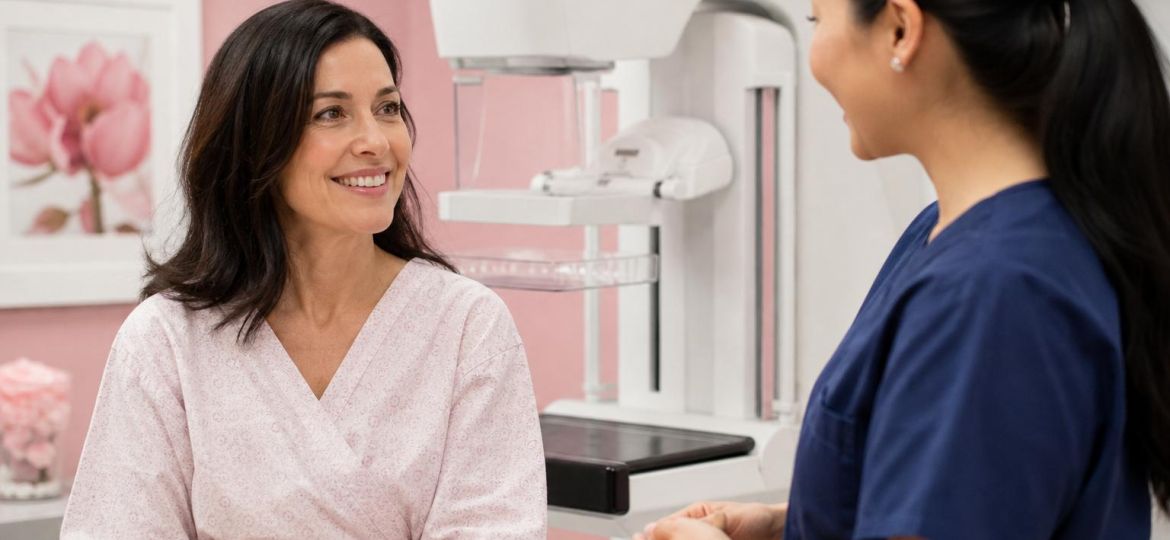
A mammogram is a low-dose X-ray of the breast. Each breast is pressed between two plates for a few seconds. It can be uncomfortable but is quick. Many centers now use 3D mammography (tomosynthesis), which may find more cancers and lead to fewer callbacks.
Tips: schedule it for the week after your period if your breasts get tender, and skip deodorant or powder that day, as they can show up on the image.
Dense breasts
Almost half of women 40 and older have dense breast tissue. Dense tissue makes cancer harder to see on a mammogram and slightly raises risk. Since 2024, the FDA requires mammogram reports to tell you whether your breasts are dense. If they are, ask your doctor whether extra imaging, such as ultrasound or MRI, makes sense for you.
If you’re at higher risk
You may need earlier or additional screening, such as yearly MRI, if you have a BRCA mutation, a strong family history, or had chest radiation at a young age. Ask your doctor about a risk assessment.
Know what’s normal for you
See a doctor about any breast changes, even if your last mammogram was normal:
- A new lump in the breast or underarm
- Thickening, swelling, dimpling or redness of the skin
- Nipple changes or discharge other than breast milk
- Pain in any area of the breast that doesn’t go away
Lowering your risk
Staying active, keeping a healthy weight and limiting alcohol all lower breast cancer risk. Even a few drinks a week raise it slightly. Our beginner full-body workout is an easy way to start.
What this means for you
- If you’re 40 or older and haven’t had a mammogram, schedule one.
- Ask whether you have dense breasts and what that means for you.
- Share your family history with your doctor.
The bottom line
Starting mammograms at 40 helps find breast cancer earlier. Get screened every 1 to 2 years, know your risk and report any changes. See our cancer screening guide by age for other tests.
Common questions
Do mammograms hurt?
They can be uncomfortable for a few seconds. Tell the technologist if it’s painful. Timing your mammogram away from your period can help.
Are mammograms covered by insurance?
Most plans cover screening mammograms with no cost-sharing. Follow-up imaging may have costs, though some states require coverage.
Do men need breast cancer screening?
Routine screening isn’t recommended for men, but men can get breast cancer. Men with a BRCA mutation or strong family history should talk with their doctor.
This article is for general information and isn’t medical advice. Talk with your healthcare provider about your individual needs.