Lung cancer causes more cancer deaths in the U.S. than any other cancer. Most cases are found late, after the cancer has spread. A yearly low-dose CT scan can find lung cancer early in people at high risk, when surgery or other treatment is more likely to cure it. Yet only a small share of people who qualify get screened.
Who should be screened
The U.S. Preventive Services Task Force (USPSTF) recommends a yearly low-dose CT scan for adults who:
- Are 50 to 80 years old, and
- Have a smoking history of at least 20 pack-years, and
- Currently smoke or quit within the past 15 years
The American Cancer Society goes further. It recommends screening for people 50 to 80 with a 20 pack-year history no matter how long ago they quit, because risk stays elevated for decades.
What’s a pack-year?
Multiply the number of packs you smoked per day by the number of years you smoked. One pack a day for 20 years is 20 pack-years. So is two packs a day for 10 years.
What the scan is like
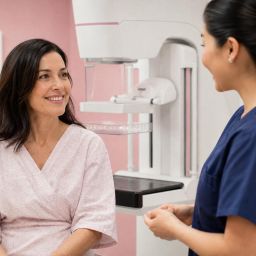
The scan takes only a few minutes. You lie on a table that slides through a CT scanner and hold your breath briefly. There are no needles or dyes. It uses much less radiation than a standard CT scan.
Benefits and downsides
In large studies, screening lowered lung cancer deaths by about 20% compared with chest X-rays. Downsides include:
- False alarms: Many scans show small spots (nodules) that turn out not to be cancer. Most only need a follow-up scan.
- Overdiagnosis: Some slow-growing cancers might never have caused harm.
- Radiation: A small amount with each scan.
That’s why screening is meant for people at higher risk, where the benefits clearly outweigh the downsides. Many insurers, and Medicare, require a shared decision-making visit first to talk this through.
Quitting still matters most
Screening doesn’t replace quitting. Stopping smoking at any age lowers your risk of lung cancer, heart attack and stroke. Free help is available at 1-800-QUIT-NOW.
Symptoms to report
Screening is for people without symptoms. See a doctor promptly for a cough that won’t go away, coughing up blood, chest pain, shortness of breath, hoarseness or unexplained weight loss.
What this means for you
- Work out your pack-years and ask your doctor if you qualify.
- If you’ve been screened, keep up with yearly scans.
- Don’t panic over a nodule. Most are not cancer.
The bottom line
If you’re 50 to 80 and have a heavy smoking history, a yearly low-dose CT scan can find lung cancer early. Ask your doctor, and see our cancer screening guide by age for other tests.
Common questions
Does insurance cover lung cancer screening?
Most private plans and Medicare cover yearly low-dose CT for people who meet the criteria, with no cost-sharing. Medicare covers ages 50 to 77.
I quit 20 years ago. Should I be screened?
The USPSTF limits screening to people who quit within 15 years, but the American Cancer Society recommends it regardless of quit date. Talk with your doctor and check your insurance coverage.
Can people who never smoked get lung cancer?
Yes. Radon, secondhand smoke, air pollution and genetics can play a role. Routine screening isn’t recommended for nonsmokers, but report any symptoms.
This article is for general information and isn’t medical advice. Talk with your healthcare provider about your individual needs.