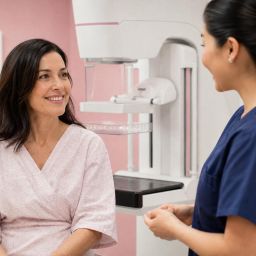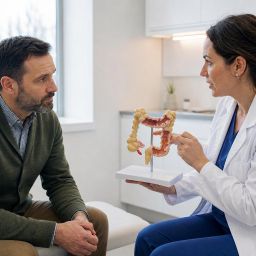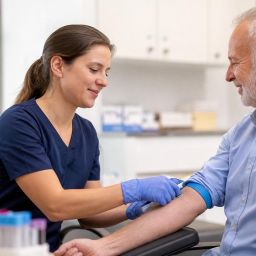
Today, there are screening tests for only a handful of cancers: breast, cervical, colorectal, lung and, for some men, prostate. Most cancer deaths come from cancers with no recommended screening, such as pancreatic, ovarian and stomach cancer. Multi-cancer early detection (MCED) tests aim to change that by looking for signs of many cancers in a single blood draw.
How they work
Tumors shed tiny pieces of DNA into the bloodstream. MCED tests look for patterns in this DNA, such as chemical tags called methylation, that are typical of cancer. If a signal is found, some tests also predict where in the body the cancer likely started, to guide follow-up testing.
Where things stand
The best-known test, Galleri from GRAIL, is designed for adults 50 and older and looks for signals from dozens of cancer types. GRAIL applied for FDA approval in January 2026. In September 2026, an FDA advisory panel voted 7 to 2 that the test’s benefits outweigh its risks, though the vote on effectiveness was closer, at 6 to 4. The FDA makes the final decision and isn’t bound by the panel.
Galleri is already available by prescription as a lab-developed test, but it typically costs several hundred dollars and is generally not covered by insurance or Medicare. The National Cancer Institute is also running a large study to evaluate MCED tests.
What the research shows
In GRAIL’s studies, adding Galleri to usual screening found several times more cancers than standard screening alone, many at earlier stages. But important questions remain:
- Missed cancers: These tests are better at finding advanced cancers than early ones. A negative result doesn’t mean you’re cancer-free.
- False positives: Some positive results turn out not to be cancer, leading to scans, biopsies and worry.
- Saving lives: It isn’t yet proven that these tests reduce cancer deaths. That’s the key question large trials are working to answer.
Not a replacement
Experts agree MCED tests should be used in addition to, not instead of, recommended screenings. A mammogram, colonoscopy or low-dose CT is still the best way to find those specific cancers early. See our cancer screening guide by age.
What this means for you
- Keep up with your standard screenings first.
- If you’re considering an MCED test, ask your doctor about cost, what a positive result would mean, and what follow-up would look like.
- Watch for the FDA’s decision, expected in the coming months.
The bottom line
Multi-cancer blood tests are a promising step toward finding more cancers early, and one is close to an FDA decision. But they can miss cancers and give false alarms, and it isn’t yet known whether they save lives. For now, they’re an add-on, not a substitute, for proven screening.
Common questions
Can I get a multi-cancer test without a doctor?
No. Galleri requires a prescription from a healthcare provider, who should also help you understand the results.
What happens if the test finds a cancer signal?
Your doctor will order more tests, usually imaging such as CT or PET scans, focused on the predicted location. Not every signal turns out to be cancer.
Will Medicare cover these tests?
Not currently. Coverage may depend on FDA approval and future legislation.
Who might consider a multi-cancer test?
Current tests are designed for adults 50 and older, who face higher cancer risk. People with a strong family history or other risk factors should discuss options with their doctor.
This article is for general information and isn’t medical advice. Talk with your healthcare provider about your individual needs.