Colorectal cancer has long been thought of as a disease of older adults. That’s changing. A March 2026 American Cancer Society report found that colorectal cancer is now the leading cause of cancer death in Americans under 50. Rates in younger adults have risen every year for more than a decade, even as rates in older adults have fallen thanks to screening.
Researchers don’t yet know exactly why. Diet, weight, inactivity, changes in gut bacteria and other factors are being studied. What is clear is that knowing the warning signs and starting screening on time can save lives.
Symptoms to take seriously
Younger adults are more likely to be diagnosed at a later stage, partly because symptoms get brushed off as hemorrhoids or stomach trouble. See a doctor if you notice:
- Blood in your stool or rectal bleeding
- A change in bowel habits that lasts more than a few days, such as diarrhea, constipation or narrower stools
- Ongoing belly pain or cramping
- Unexplained weight loss
- Fatigue or iron-deficiency anemia without a clear reason
These symptoms often have other causes, but they deserve a check, at any age.
Screening starts at 45
For people at average risk, the USPSTF and the American Cancer Society recommend starting screening at 45. Yet only about a third of adults aged 45 to 49 are up to date. Options include:
- Colonoscopy every 10 years. It can find and remove polyps in the same procedure.
- Stool tests done at home: a FIT test every year or a stool DNA test every 1 to 3 years. A positive result needs a follow-up colonoscopy.
- CT colonography or flexible sigmoidoscopy every 5 years.
- Blood tests are newer options for people who decline other tests, but they are less likely to find precancerous polyps.
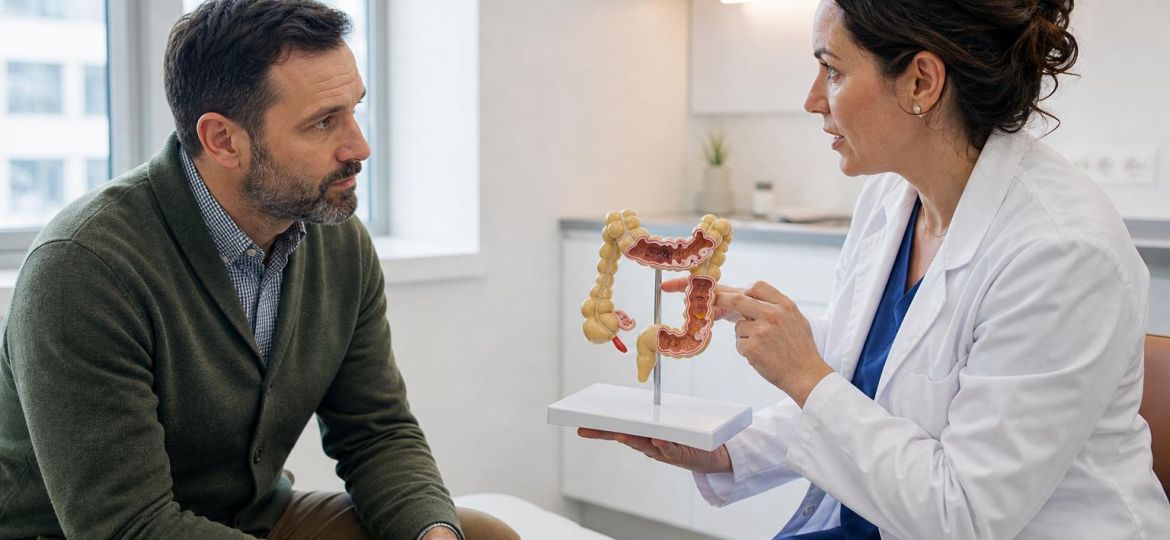
The best test is the one you’ll actually do. Talk with your doctor about which fits you.
Who should start earlier
You may need screening before 45 if you have a parent, sibling or child with colorectal cancer or advanced polyps, inflammatory bowel disease, or an inherited condition such as Lynch syndrome. See our cancer screening guide by age for other tests.
Lowering your risk
- Eat more fiber from vegetables, fruits, beans and whole grains. Try our hearty lentil vegetable soup.
- Limit red and processed meats.
- Stay active. Our exercise guide can help you get started.
- Limit alcohol and don’t smoke.
What this means for you
- If you’re 45 or older, ask about screening at your next visit.
- Don’t ignore rectal bleeding or lasting bowel changes, even if you’re young.
- Know your family history.
The bottom line
Colorectal cancer is rising in younger adults, but it’s one of the most preventable and treatable cancers when found early. Start screening at 45, or earlier if you’re at higher risk, and get symptoms checked.
Common questions
Is a home stool test as good as a colonoscopy?
Stool tests are effective when done on schedule, but they don’t remove polyps. A positive result needs a colonoscopy. Colonoscopy finds and removes polyps in one step.
Does insurance cover screening at 45?
Most private plans cover screening starting at 45 with no cost-sharing. A follow-up colonoscopy after a positive stool test should also be covered. Check with your plan.
Can young people get colonoscopies without symptoms?
If you’re under 45 with no symptoms and no higher risk, screening usually isn’t recommended. If you have symptoms or a strong family history, your doctor may order a colonoscopy as a diagnostic test.
This article is for general information and isn’t medical advice. Talk with your healthcare provider about your individual needs.