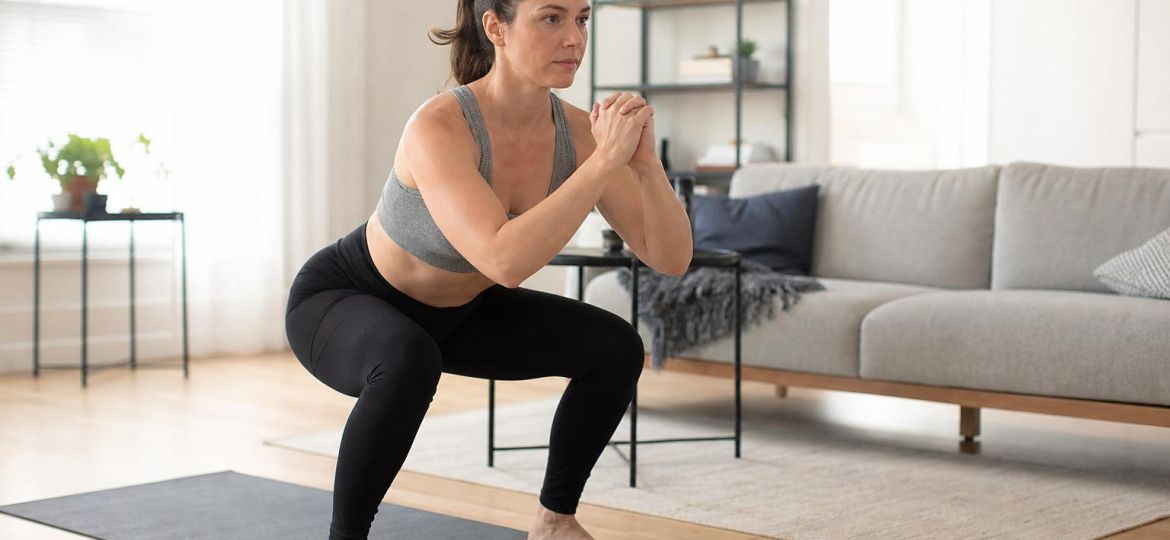
Starting an exercise routine can feel overwhelming, especially if you’re not sure what to do or don’t have access to a gym. This beginner workout takes about 20 minutes, needs no equipment and works every major muscle group using just your body weight.
Strength training isn’t only for athletes. The CDC recommends that adults do muscle-strengthening activities that work all major muscle groups at least two days a week, on top of regular aerobic activity. This routine is an easy way to check that box at home.
20-Minute Beginner Full-Body Workout (No Equipment): At a Glance
Before You Start
- Wear comfortable clothes and supportive shoes, or go barefoot on a non-slip surface.
- Clear a space about the size of a yoga mat.
- Keep water nearby and breathe steadily throughout. Don’t hold your breath while you work.
- Move slowly and with control. Good form matters more than speed or the number of reps.
Warm-Up (3 to 5 minutes)
- March in place for 1 minute, swinging your arms.
- 10 arm circles forward and 10 backward.
- 10 gentle torso twists, turning side to side.
- 10 hip circles in each direction.
- 10 slow bodyweight squats to a comfortable depth.
The Workout
Do each exercise for the listed reps, then move to the next. Rest 30 to 60 seconds between exercises. Once you finish all six, rest 1 to 2 minutes and repeat the circuit. Beginners can start with 2 rounds and build up to 3.
- Chair squat (10 to 12 reps)
Stand in front of a sturdy chair with your feet hip-width apart. Push your hips back and bend your knees to lower until you lightly touch the seat, then stand back up. Form tip: Keep your chest up and your knees in line with your toes. - Wall or incline push-up (8 to 12 reps)
Place your hands on a wall or kitchen counter slightly wider than your shoulders. Step your feet back, lower your chest toward your hands, then push back. Form tip: Keep your body in a straight line from head to heels. - Glute bridge (10 to 12 reps)
Lie on your back with your knees bent and feet flat. Squeeze your glutes and lift your hips until your body forms a straight line from shoulders to knees. Lower slowly. Form tip: Push through your heels and avoid arching your lower back. - Reverse lunge (6 to 8 reps per leg)
From standing, step one foot back and lower until both knees are bent. Push through your front heel to return to standing. Hold a chair for balance if needed. Form tip: Keep most of your weight in your front leg. - Bird dog (6 to 8 reps per side)
On hands and knees, extend your right arm forward and left leg back. Hold for 2 seconds, return, then switch sides. Form tip: Keep your back flat and your hips level, as if balancing a glass of water on your back. - Forearm plank (Hold 15 to 30 seconds)
Rest on your forearms and toes (or knees) with your elbows under your shoulders. Hold your body in a straight line. Form tip: Squeeze your stomach and glutes and keep breathing.
Cool-Down (3 to 5 minutes)
- Walk slowly around the room for 1 minute.
- Standing quad stretch: 20 to 30 seconds per leg.
- Hamstring stretch: 20 to 30 seconds per leg.
- Chest stretch in a doorway: 20 to 30 seconds.
- Child’s pose: 30 seconds, breathing deeply.
Make It Easier or Harder
- Easier: Do 1 round, use a higher surface for push-ups, and do plank on your knees.
- Harder: Add a third round, do push-ups on the floor, or squat without the chair.
- Progress gradually: When 12 reps feel easy, add 2 to 3 reps or another round before making moves harder.
- Joint pain? Reduce your range of motion and skip any move that causes sharp pain.
Why This Workout Helps
Strength training helps build and maintain muscle, supports healthy bones, makes everyday tasks like climbing stairs easier and helps the body manage blood sugar. These benefits matter at every age, because muscle mass naturally declines over time if we don’t use it.
Pair this routine with aerobic activity, such as brisk walking, to work toward the CDC’s recommendation of 150 minutes of moderate activity each week. Consistency is more important than intensity, so pick days you can stick with.
This article is for general information and isn’t medical advice. Check with your doctor before starting a new exercise program, especially if you have heart disease, diabetes, high blood pressure, joint problems, a lung condition or another health concern. Stop and seek medical help if you feel chest pain, dizziness, faintness or severe shortness of breath.