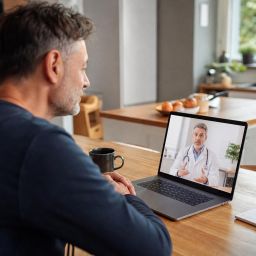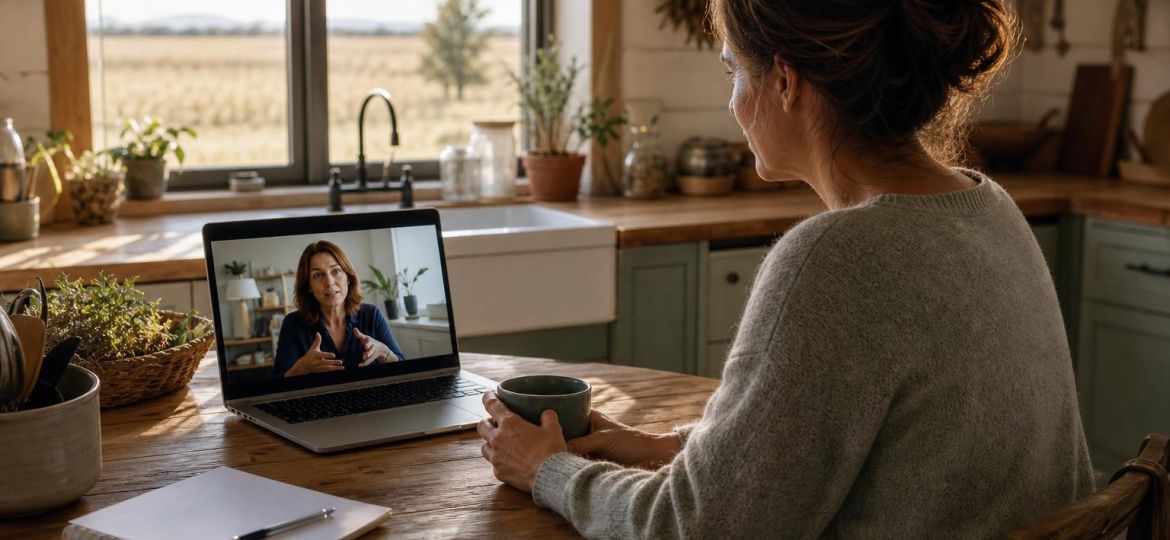
For people living in rural areas, getting mental health care can mean long drives, long waits and few local options. Telehealth, therapy delivered by video or phone, has been promoted as a solution. A study published in BMC Psychiatry found that for rural patients, telebehavioral health was about as effective as in-person care for easing depression and anxiety.
How the study worked
Researchers analyzed outcomes for 1,514 patients served through two U.S. federal grant programs that support telehealth and substance use treatment in rural communities. The programs involved 17 grantees and 95 sites, each of which served some patients by telehealth and some in person.
Patients’ symptoms were measured with two standard questionnaires: the PHQ-9 for depression, scored out of 27, and the GAD-7 for anxiety, scored out of 21. The researchers compared scores at the start of care with scores about a month later.
What they found
- Depression improved similarly. PHQ-9 scores dropped by an average of 2.8 points with telehealth and 2.9 points with in-person care.
- Anxiety improved similarly. GAD-7 scores dropped by an average of 2.0 points with telehealth and 2.4 points with in-person care.
The researchers concluded that telebehavioral health delivered to rural areas was as effective as in-person care for anxiety and depression symptoms, an important reassurance as telehealth continues beyond the pandemic.
What these scores mean
The PHQ-9 and GAD-7 are short questionnaires that ask how often you’ve been bothered by symptoms such as low mood, loss of interest, worry or trouble relaxing over the past two weeks. Doctors use them to screen for depression and anxiety and to track progress over time. A drop of a few points within a month shows symptoms moving in the right direction, and the key finding is that the drop was similar whether care happened by screen or in person.
Why rural mental health care is hard to get
Rural residents face many barriers to mental health care:
- Fewer local therapists and psychiatrists, and long travel distances
- Higher rates of poverty and lower rates of insurance
- Stigma, which can be greater in small communities where privacy is harder to keep
- Childcare and work responsibilities that make appointments difficult
- Additional barriers for women and people from minority groups, including discrimination
Telehealth can ease many of these barriers by bringing care into the home, saving travel time and offering more privacy.
Keep in mind
This study followed patients for only about a month, and it compared real-world programs rather than randomly assigning people to telehealth or in-person care. Still, it adds to a body of research, including randomized trials, that has found little difference between the two for many conditions. Earlier studies often included few rural or minority patients, which made this real-world evidence valuable.
Making telehealth work for you
- Check your connection. If video is unreliable, ask whether phone sessions are available.
- Find a private space, such as a parked car, a quiet room or a time when others are out, so you can speak freely.
- Check coverage. Ask your insurer or the provider about telehealth costs.
- Ask about licensing. Therapists generally need to be licensed in the state where you are located.
- Combine approaches. Some people do most sessions virtually and occasional visits in person.
- Know crisis options. In the U.S., call or text 988 any time if you’re in crisis.
The bottom line
For rural patients, telehealth reduced depression and anxiety symptoms about as much as in-person care. It’s a practical way to reach mental health support when distance, cost or stigma stand in the way.
This article is for general information and isn’t medical advice. Talk with your healthcare provider about your individual needs.