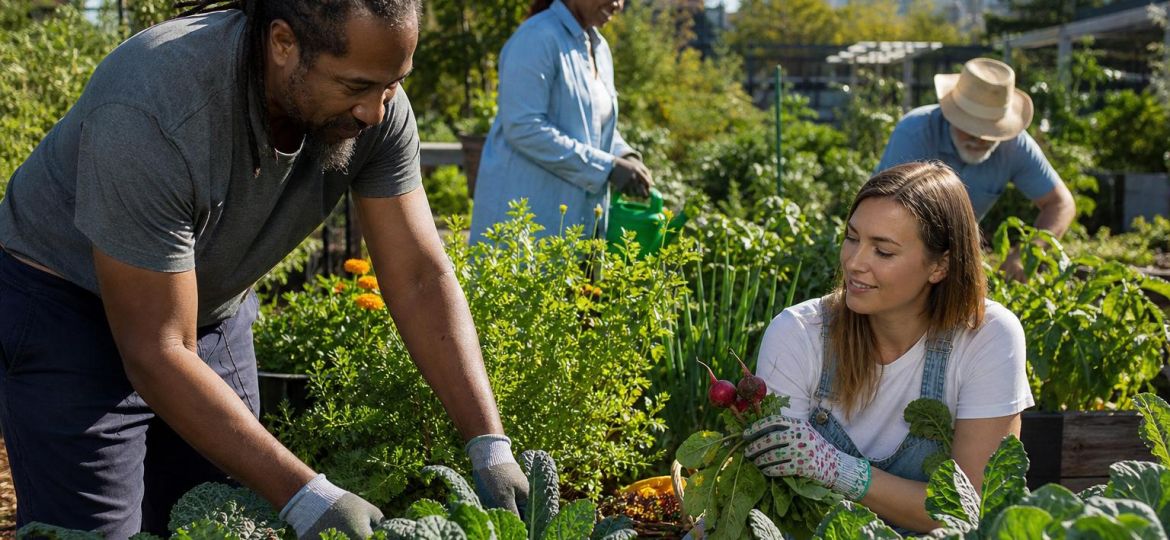
Gardening has long had a reputation for being good for body and mind. A study published in The Lancet Planetary Health put that idea to a rigorous test, and found that people who took up community gardening ate more fiber, got more physical activity and felt less stressed. Those are all habits linked to a lower risk of cancer and other chronic diseases.
A first-of-its-kind trial
Many earlier studies found that gardeners tend to be healthier. But that doesn’t prove gardening is the reason; healthier people may simply be more likely to garden. To get a clearer answer, researchers at the University of Colorado Boulder ran what they described as the first randomized controlled trial of community gardening.
The team screened 493 adults in the Denver area between 2017 and 2019. Of those, 291 completed baseline measurements and were randomly assigned to one of two groups:
- The gardening group got a community garden plot right away, along with an introductory gardening course through the Denver Urban Gardens program.
- The comparison group was placed on a waitlist and started gardening a year later.
Participants wore activity monitors, had body measurements taken, and filled out regular surveys about their diet and mental health.
What the researchers found
Compared with the waitlist group, the gardeners:
- Ate more fiber, by about 1.4 grams a day on average. That may sound small, but researchers noted it’s a meaningful increase for health, since most adults don’t get enough fiber.
- Were more physically active, adding roughly 40 minutes of moderate-to-vigorous activity per week.
- Reported lower stress and anxiety, with the biggest improvements among people who started out the most stressed.
“These findings provide concrete evidence that community gardening could play an important role in preventing cancer, chronic diseases and mental health disorders,” senior author Jill Litt, a professor of environmental studies at CU Boulder, said, according to Medical Xpress.
Why these changes matter for cancer risk
Eating more fiber is linked to a lower risk of colorectal cancer, and regular physical activity is linked to lower risks of several cancers, as well as heart disease and type 2 diabetes. Chronic stress and social isolation are also associated with poorer health. Community gardening touches all of these at once: it gets people outdoors and moving, puts fresh produce on the table and creates social connections with fellow gardeners.
Important limits
The study didn’t measure cancer cases directly. It measured habits and risk factors known to influence cancer risk. It also took place in one city, and participants who signed up for a gardening study may have been especially motivated. Still, the randomized design makes the findings stronger than earlier observational research.
What this means for you
- Look for a community garden. Many cities, libraries and nonprofits offer plots and beginner classes.
- Start small at home. A few pots of herbs, tomatoes or greens on a balcony or windowsill is a good start.
- Eat what you grow. Fresh vegetables are an easy way to add fiber to your meals.
- Count it as exercise. Digging, weeding, carrying and planting all add up.
- Garden with others. The social side of gardening may be part of why it lowers stress.
The bottom line
In a randomized trial, people who took up community gardening ate more fiber, moved more and felt less stressed. Those changes are linked to a lower risk of cancer and chronic disease, making gardening an enjoyable way to support long-term health.
This article is for general information and isn’t medical advice. Talk with your healthcare provider about your individual needs.