If you spend most of your day at a desk, you probably know the feeling: a stiff neck, tight shoulders, an achy lower back and hips that protest when you finally stand up. Sitting for long stretches also slows circulation and leaves many people feeling sluggish by mid-afternoon.
This 10-minute routine is designed to be done at work, in regular clothes, with nothing more than your chair and a little floor space. Mayo Clinic notes that moving more throughout the day, including standing up and stretching regularly, can help offset some of the risks of sitting too much.
10-Minute Desk Break Stretch Routine: At a Glance
Before You Start
- Stretch gently. You should feel a mild pull, never pain.
- Breathe slowly and don’t bounce.
- Lock the wheels of your chair or use a stable chair for seated moves.
- Skip any stretch that aggravates an existing injury.
Warm-Up (1 minute)
- Stand up and march in place for 30 seconds.
- Roll your shoulders backward 10 times.
The Workout
Hold each stretch for 20 to 30 seconds, breathing deeply. Do each side where noted. The whole sequence takes about 8 minutes.
- Neck side stretch (20 to 30 seconds per side)
Sit tall and gently tilt your right ear toward your right shoulder. For a deeper stretch, place your right hand lightly on your head. Switch sides. Form tip: Keep the opposite shoulder relaxed and down. - Chin tuck (10 reps)
Sitting tall, gently draw your chin straight back, as if making a double chin. Hold 2 seconds and release. Form tip: This counters the forward head posture of screen work. - Seated spinal twist (20 to 30 seconds per side)
Sit tall, place your left hand on your right knee and your right hand on the back of the chair. Gently rotate to the right. Switch sides. Form tip: Lengthen your spine before you twist. - Chest opener (20 to 30 seconds)
Clasp your hands behind your back (or hold the back of your chair) and gently lift your chest, drawing your shoulder blades together. Form tip: Don’t let your lower back arch excessively. - Seated figure-four stretch (20 to 30 seconds per side)
Cross your right ankle over your left knee and gently lean forward with a straight back until you feel a stretch in your right hip. Switch sides. Form tip: Keep both sit bones on the chair. - Standing hip flexor stretch (20 to 30 seconds per side)
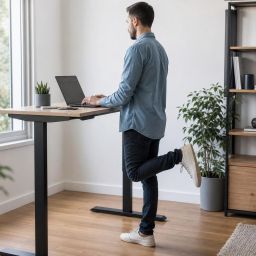
Stand and take a short step back with your right foot. Tuck your hips slightly under and bend your front knee until you feel a stretch in the front of your right hip. Form tip: Hold the desk for balance. - Wrist and forearm stretch (20 seconds each direction)
Extend one arm, palm up, and gently pull your fingers back with the other hand. Then turn the palm down and gently press the back of the hand. Form tip: Great for heavy keyboard and mouse users. - Standing calf raises (15 reps)
Holding the desk, rise onto your toes and lower slowly. Form tip: This helps get blood moving in the lower legs.
Cool-Down (1 minute)
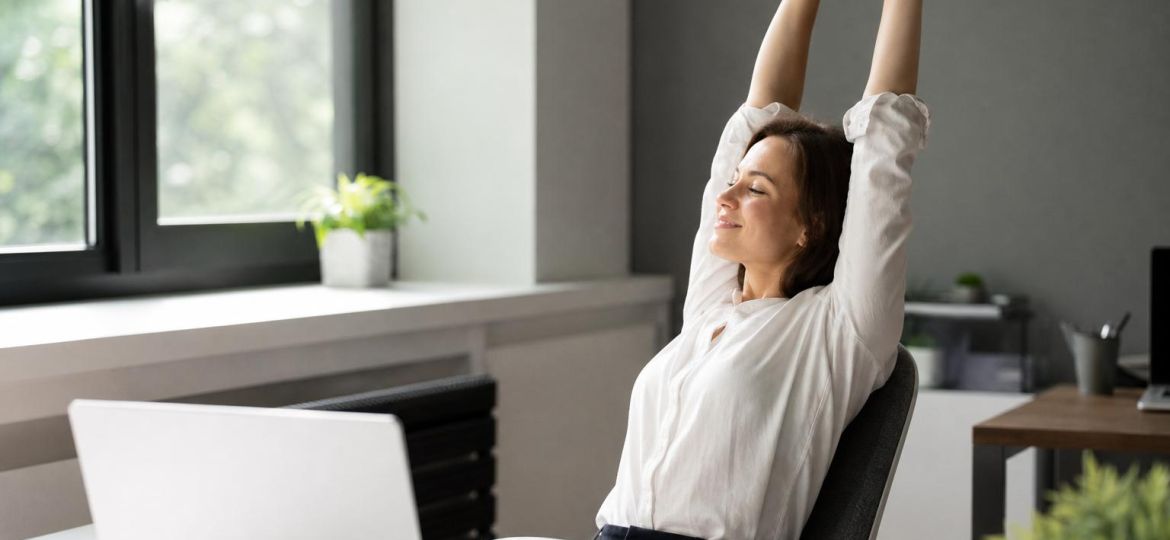
- Stand tall, reach both arms overhead and take 3 slow, deep breaths.
- Shake out your arms and legs.
Make It Easier or Harder
- Short on time? Pick 3 stretches that target your tightest areas and do them every hour.
- Add movement: Take walking meetings, use the stairs or walk to a coworker’s desk instead of messaging.
- Set reminders: Use a phone or computer timer to stand up every 30 to 60 minutes.
- Check your setup: Position your screen at eye level and keep your feet flat on the floor.
Why This Workout Helps
Long periods of sitting are linked to a higher risk of heart disease, type 2 diabetes and other health problems, even among people who exercise. Breaking up sitting time with short bouts of movement helps keep muscles active and blood flowing.
Regular stretching can also ease the muscle tension that builds from hours of screen work and may help you return to work feeling more focused.
This article is for general information and isn’t medical advice. Check with your doctor before starting a new exercise program, especially if you have heart disease, diabetes, high blood pressure, joint problems, a lung condition or another health concern. Stop and seek medical help if you feel chest pain, dizziness, faintness or severe shortness of breath.