High blood pressure is often called a “silent killer” because it usually causes no symptoms while it quietly raises the risk of heart attack, stroke and kidney disease. Checking your blood pressure at home is one of the best ways to keep track of it between doctor visits. But to be useful, home readings need to be accurate.
Why home monitoring helps
- It shows your true pattern. Readings taken at home over days and weeks give a fuller picture than a single reading at the doctor’s office.
- It catches “white coat” effects. Some people’s blood pressure rises at the doctor’s office out of nervousness. Others have normal readings at the clinic but high readings at home.
- It helps with treatment. Home readings help you and your doctor see whether lifestyle changes or medicines are working.
Choosing a monitor
- Pick an automatic upper-arm cuff. Experts generally recommend these over wrist or finger monitors, which can be less accurate.
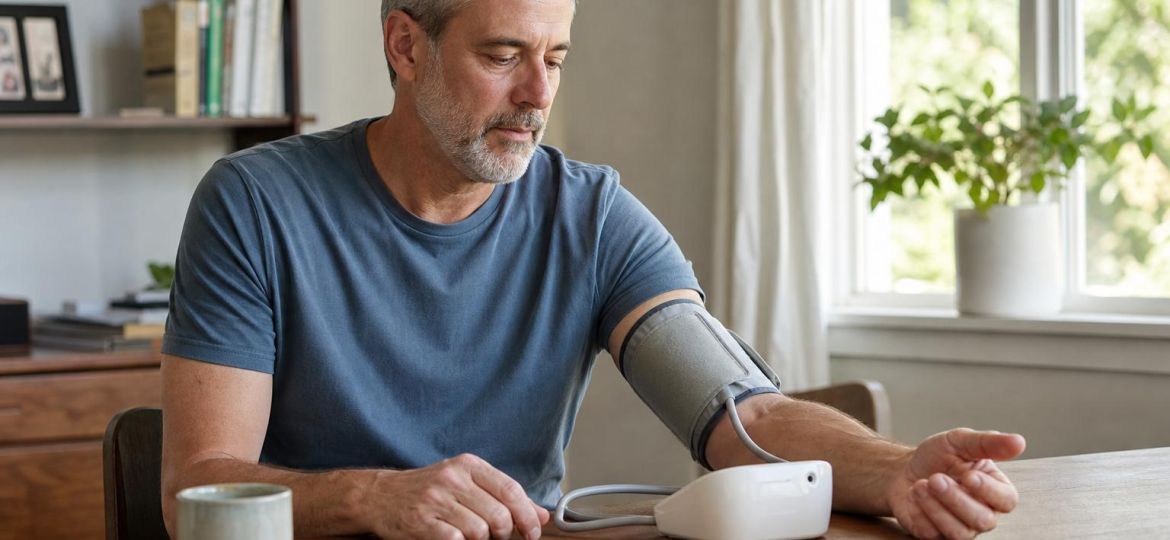
- Get the right cuff size. A cuff that’s too small or too large gives wrong readings. Measure around your upper arm and check the cuff range on the box. People with larger arms may need a larger cuff.
- Look for a validated device. Validated monitors have been tested for accuracy. Your pharmacist can help you choose one.
- Bring it to your next appointment so your doctor or nurse can check it against their equipment.
How to take an accurate reading
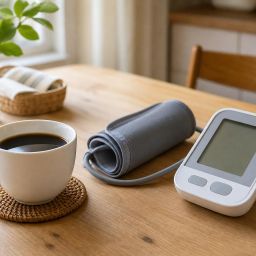
- Prepare. Avoid caffeine, alcohol, smoking and exercise for at least 30 minutes beforehand, and empty your bladder.
- Rest. Sit quietly for at least five minutes before measuring.
- Sit correctly. Keep your back supported, feet flat on the floor and legs uncrossed.
- Position your arm. Rest it on a table so the cuff is at heart level, on bare skin rather than over clothing.
- Stay still and quiet. Don’t talk or look at your phone while the cuff inflates.
- Take two or three readings, about one minute apart, and record them all.
- Be consistent. Measure at the same times each day, such as morning and evening, as your doctor recommends.
Understanding your numbers
Blood pressure is written as two numbers, such as 120/80 mm Hg. The top number (systolic) is the pressure when your heart beats, and the bottom number (diastolic) is the pressure between beats. According to the American Heart Association, a normal reading is below 120/80. Readings consistently at 130/80 or higher are considered high blood pressure. Your doctor will help you understand your target.
Keep a log of your readings, either on paper or in an app, and note anything unusual, such as feeling stressed or having missed a dose of medicine. Many monitors store readings automatically. Look for trends over time rather than worrying about a single high number.
When to get help
If your reading is higher than 180/120, wait a few minutes and check again. If it’s still that high and you have symptoms such as chest pain, shortness of breath, back pain, numbness or weakness, vision changes or difficulty speaking, call emergency services. If it’s that high without symptoms, contact your doctor promptly.
Tips for healthier blood pressure
- Cut back on salt and processed foods
- Eat more vegetables, fruits and whole grains
- Stay active most days of the week
- Limit alcohol and don’t smoke
- Take prescribed medicines as directed
The bottom line
Home blood pressure monitoring is a powerful tool when done correctly. Use a well-fitting upper-arm cuff, follow a consistent routine and share your readings with your doctor.
This article is for general information and isn’t medical advice. Talk with your healthcare provider about your individual needs.